What Is Off-Page SEO? A Complete Guide to Off-Page SEO Strategy in 2026

Introduction
When most people think about SEO, they focus on optimizing content, keywords, and website structure. While those on-page activities are important, they are only one part of the SEO equation.
To achieve higher rankings and build long-term authority, you also need a strong Off-Page SEO strategy.
Off-page SEO refers to all the actions you take outside your website to improve its reputation, credibility, and search engine rankings. These activities help search engines understand that your website is trustworthy and valuable to users.
In this guide, you’ll learn what off-page SEO is, why it matters, and the most effective off-page SEO techniques you can use to improve your rankings in 2026.
What Is Off-Page SEO?
Off-page SEO is the process of improving your website’s visibility and authority through activities that happen outside your website.
Unlike on-page SEO, which focuses on optimizing content and technical elements on your site, off-page SEO focuses on building trust, credibility, and authority across the internet.
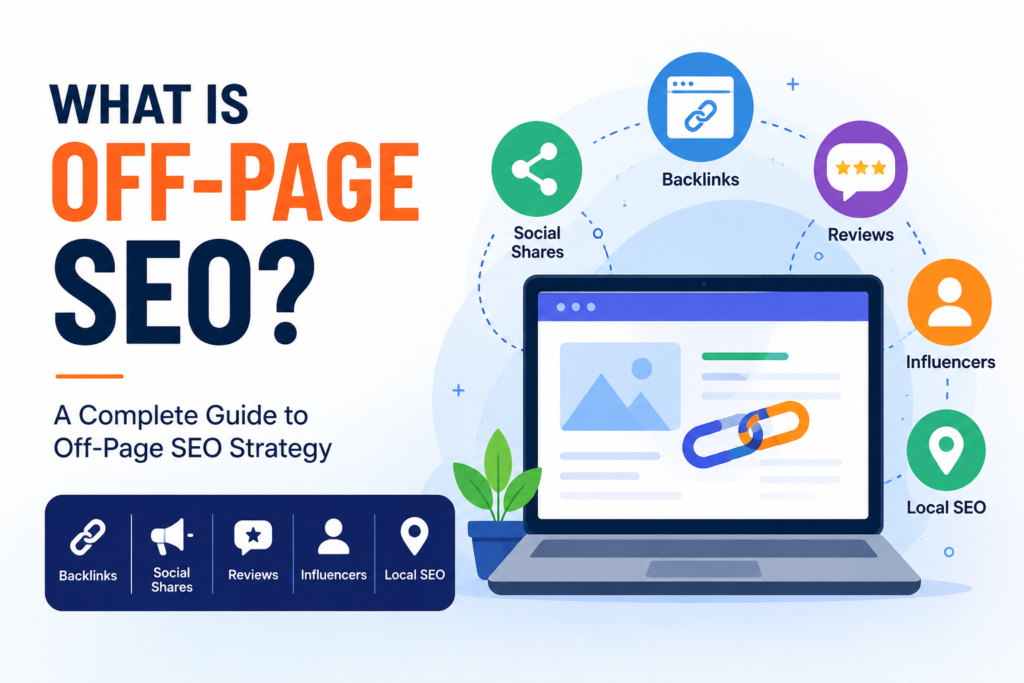
Common off-page SEO activities include:
- Link building
- Guest posting
- Social media marketing
- Influencer outreach
- Brand mentions
- Online reviews
- Local SEO
- Content promotion
The primary goal of off-page SEO is to convince search engines that your website is valuable, trustworthy, and worthy of higher rankings.
Why Is Off-Page SEO Important?
Search engines like Google want to provide users with the most reliable and useful results.
One way they determine a website’s credibility is by analyzing signals from other websites and platforms.
For example:
- Websites linking to your content
- Positive customer reviews
- Brand mentions across the web
- Social media engagement
- Industry recognition
These signals act as recommendations that tell search engines your website deserves attention.
Strong off-page SEO can help:
- Improve search engine rankings
- Increase website authority
- Generate referral traffic
- Build brand awareness
- Attract more backlinks
- Boost online credibility
Without off-page SEO, it becomes difficult to compete for highly competitive keywords.
Understanding Google’s E-E-A-T
A major part of off-page SEO is demonstrating E-E-A-T:
Experience
Shows that content comes from real-world experience.
Expertise
Demonstrates deep knowledge of a subject.
Authoritativeness
Reflects your reputation within your industry.
Trustworthiness
Shows that users can rely on your content and website.
Off-page SEO activities such as backlinks, reviews, and brand mentions help strengthen these signals.
On-Page SEO vs. Off-Page SEO
Although both are important, they serve different purposes.
| On-Page SEO | Off-Page SEO |
|---|---|
| Keyword optimization on website pages | Building backlinks from other websites |
| Creating and optimizing content | Guest blogging and content promotion |
| Optimizing meta titles and descriptions | Earning brand mentions online |
| Improving internal linking structure | Social media marketing and sharing |
| Enhancing page speed, images, and user experience | Managing reviews, local citations, and online reputation |
For the best results, businesses should combine on-page SEO, off-page SEO, and technical SEO.
5 Effective Off-Page SEO Techniques
Let’s explore the most effective off-page SEO techniques that can improve your website’s authority and rankings.
1. Link Building
Link building remains one of the most important off-page SEO strategies.
A backlink is a link from another website pointing to your site.
When reputable websites link to your content, search engines see it as a vote of confidence.
Benefits of Link Building:
- Improves domain authority
- Increases rankings
- Drives referral traffic
- Enhances brand credibility
- Helps search engines discover new content
Effective Link Building Methods:
(a) Broken Link Building
Find broken links on relevant websites and suggest your content as a replacement.
This helps website owners fix errors while earning valuable backlinks.
(b) Unlinked Brand Mentions
Sometimes websites mention your brand without linking to it.
Reach out and politely request that they add a link.
(c) Journalist Outreach
Journalists often seek expert opinions and resources.
Providing valuable insights can earn backlinks from major publications.
2. Content Marketing
Creating valuable content is one of the most powerful ways to earn backlinks naturally.
High-quality content attracts:
- Links
- Shares
- Mentions
- Traffic
- Brand recognition
Content marketing and off-page SEO work together to build authority.
Digital PR
Digital PR helps brands earn media coverage and backlinks from authoritative websites.
Benefits include:
- Increased brand visibility
- Strong backlinks
- Higher authority
- More referral traffic
Social Media Marketing
Although social signals are not direct ranking factors, social media helps amplify content reach.
Benefits include:
- More website traffic
- Increased content exposure
- More brand mentions
- Better audience engagement
Popular platforms include:
- X (Twitter)
Influencer Marketing
Partnering with influencers helps expose your content to new audiences.
Influencers can:
- Share your content
- Promote your products
- Generate brand awareness
- Drive traffic to your website
Guest Posting
Guest posting involves writing articles for other websites in your niche.
Benefits include:
- Quality backlinks
- Brand exposure
- Industry authority
- Referral traffic
Focus on providing value rather than simply acquiring links.
Podcasts
Appearing as a podcast guest allows you to:
- Reach new audiences
- Showcase expertise
- Build credibility
- Earn backlinks from podcast websites
Podcast marketing continues to grow and remains an effective off-page SEO tactic.
Content Syndication
Content syndication means republishing your content on third-party platforms.
Popular platforms include:
- Medium
- LinkedIn Articles
- Business 2 Community
- Quuu
Always include a link back to the original article to avoid duplicate content issues.
Forum Participation
Forums help establish expertise and connect with potential customers.
Popular platforms include:
- Quora
- Industry-specific forums
Focus on helping users rather than dropping links.
3. Local SEO
Local SEO is essential for businesses serving specific geographic locations.
Strong local SEO improves visibility in local search results and Google Maps.
Google Business Profile Optimization
A Google Business Profile helps customers find your business online.
Optimization tips:
- Keep information accurate
- Add photos regularly
- Respond to reviews
- Publish updates
- Select the correct business category
A well-optimized profile can significantly improve local rankings.
NAP Citations
NAP stands for:
- Name
- Address
- Phone Number
Ensure your NAP information is consistent across:
- Business directories
- Social media profiles
- Review websites
- Local listings
Consistency helps search engines trust your business information.
4. Online Reviews
Reviews are powerful trust signals for both users and search engines.
Positive reviews can influence purchasing decisions and improve local SEO performance.
Benefits of Reviews
- Increase trust
- Improve local rankings
- Enhance brand reputation
- Generate more conversions
Review Management Tips
- Ask customers for reviews
- Respond to positive reviews
- Address negative reviews professionally
- Monitor review platforms regularly
Google values businesses that actively engage with customer feedback.
5. Events and Brand Promotion
Hosting or sponsoring events can generate significant attention for your business.
Events often lead to:
- Media coverage
- Social media mentions
- Backlinks
- Brand awareness
- Community engagement
Examples include:
- Webinars
- Conferences
- Workshops
- Product launches
- Local community events
These activities create natural opportunities for mentions and links across the web.
Common Off-Page SEO Mistakes to Avoid
Many websites hurt their SEO by using outdated tactics.
Avoid:
- Buying backlinks
- Participating in link schemes
- Spamming forums
- Publishing low-quality guest posts
- Using automated link-building tools
- Creating fake reviews
Search engines can penalize websites that use manipulative SEO practices.
Conclusion
Off-page SEO is a critical component of any successful SEO strategy. While on-page SEO helps optimize your website, off-page SEO builds the authority and trust needed to compete in search results.
By focusing on link building, content marketing, local SEO, reviews, and brand promotion, you can strengthen your website’s reputation and improve organic rankings over time.
The most effective off-page SEO strategy is one that prioritizes value, credibility, and genuine relationships rather than shortcuts. Consistent effort in these areas will help your website achieve sustainable growth and long-term search visibility.
FAQs
1. What is Off-Page SEO and why is it important?
Off-Page SEO refers to all optimization activities performed outside your website to improve its search engine rankings. It is important because it helps build website authority, trust, and credibility through backlinks, brand mentions, reviews, and social signals, which can lead to higher rankings and more organic traffic.
2. What are the most effective Off-Page SEO techniques?
Some of the most effective Off-Page SEO techniques include link building, guest posting, content marketing, social media promotion, influencer marketing, online reputation management, local SEO, and earning positive customer reviews. These strategies help increase your website’s authority and visibility online.
3. How long does it take to see results from Off-Page SEO?
Off-Page SEO is a long-term strategy, and results can take anywhere from a few weeks to several months depending on your competition, website authority, and the quality of backlinks and mentions you earn. Consistent effort typically leads to sustainable improvements in rankings and organic traffic.
ALSO READ:
Aman Khati
Digital marketing expert at Gundrux. Specialising in SEO, WordPress, Social Media Automation and Faceless AI YouTube.