What Is AI Sentiment Analysis? A Complete Guide for Marketers in 2026

Introduction
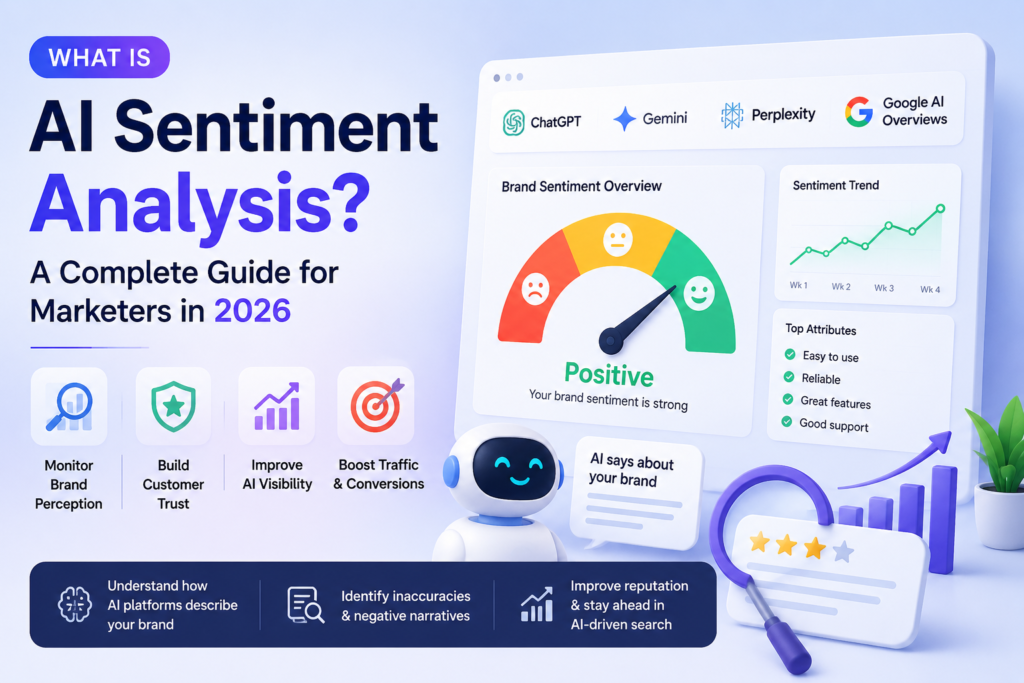
Artificial intelligence is changing how consumers discover and evaluate brands. Many people now use platforms like ChatGPT, Gemini, Perplexity, and Google AI Overviews to research products and compare options. This growing trend makes AI Sentiment Analysis essential for understanding how AI platforms describe your brand.
Since AI-generated responses can influence customer opinions before they visit your website, AI Sentiment Analysis helps businesses monitor brand perception, identify inaccuracies, and improve their reputation across AI-driven search experiences.
Understanding AI Sentiment Analysis
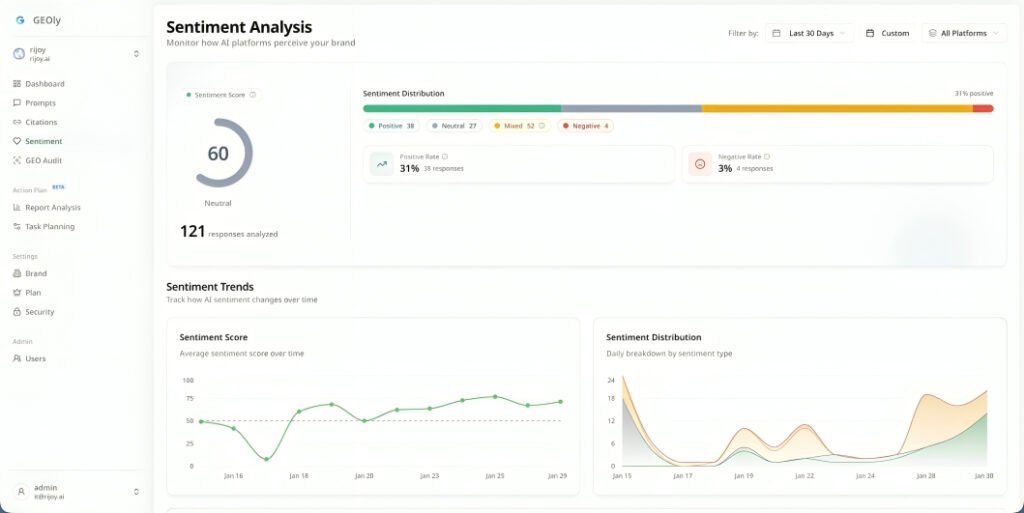
AI Sentiment Analysis is the process of evaluating how AI platforms describe your brand and whether those descriptions are positive, neutral, or negative. AI tools often highlight a company’s strengths, weaknesses, and market position, which can influence customer perceptions.
Through AI Sentiment Analysis, businesses can identify inaccurate information, negative narratives, and misconceptions, helping them improve brand reputation and ensure AI systems present a more accurate image of their company.
Why AI Sentiment Analysis Matters
AI-powered search and recommendation tools are becoming an important part of the customer journey. Many consumers now use AI to:
- Research products and services
- Compare competing brands
- Evaluate product features
- Make final purchasing decisions
AI-generated opinions can directly influence brand awareness, customer trust, website traffic, and conversions. If AI platforms provide inaccurate or outdated information, potential customers may form negative impressions before visiting your website. By monitoring AI sentiment, businesses can identify these issues early, improve brand perception, and increase visibility, engagement, and conversions from AI-driven traffic.
How to Evaluate AI Brand Sentiment

AI Sentiment Analysis helps businesses understand how AI platforms describe their brand. To gain accurate insights, companies should review both AI-generated responses and the online sources that influence those responses.
1. Review AI Responses Manually
A simple starting point is asking AI platforms questions related to your industry, products, services, and competitors.
Examples include:
- What are the best project management tools?
- Which software is ideal for small businesses?
- How does Brand A compare with Brand B?
These responses can reveal:
- Whether your brand appears in AI recommendations
- Which competitors are mentioned alongside you
- Positive and negative attributes associated with your company
- Common narratives AI systems use when describing your brand
While useful, manual analysis can become time-consuming when monitoring large numbers of prompts.
2. Track AI Sentiment at Scale
Businesses can use AI visibility and monitoring tools to measure brand perception across multiple AI platforms.
These tools help marketers monitor:
- Brand mention frequency
- Share of voice
- Positive and negative sentiment trends
- Competitive positioning
- Changes in AI perception over time
Regular monitoring allows teams to identify shifts in sentiment before they affect business performance.
3. Monitor Online Brand Mentions
AI models often rely on information gathered from websites, reviews, forums, news articles, social media discussions, and comparison platforms.
Because of this, businesses should continuously track how their brand is discussed across the web.
Monitoring online conversations helps companies:
- Detect reputation issues early
- Understand customer perceptions
- Identify recurring complaints
- Spot inaccurate information
- Discover opportunities to improve brand messaging
A strong online reputation often contributes to more favorable AI-generated descriptions.
How to Improve AI Sentiment

Improving AI sentiment requires understanding the factors influencing AI-generated narratives and strengthening your brand presence accordingly.
1) Identify Influential Sources
The first step is determining where AI platforms obtain information about your brand.
These sources may include:
- Company websites
- Product pages
- Review platforms
- Industry publications
- Forums and communities
- Comparison websites
Look for content that contains outdated information, unclear messaging, inaccurate claims, or recurring criticisms. Addressing these issues can help improve how AI systems interpret your brand.
2) Strengthen Your Website Content
AI systems often rely heavily on information published on a company’s own website.
To improve AI understanding:
- Clearly explain products and services
- Define target audiences and use cases
- Update outdated content regularly
- Replace vague marketing language with specific details
- Highlight key differentiators and benefits
Providing accurate and comprehensive information reduces the likelihood that AI systems will fill information gaps with assumptions or third-party interpretations.
3) Build a Stronger Third-Party Presence
Your website is only one part of the equation. External sources also shape AI-generated opinions.
Consider:
- Managing online reviews
- Updating business listings
- Correcting inaccurate information
- Contributing expert insights to industry publications
- Engaging in relevant communities
- Earning mentions from reputable media outlets
Consistent and accurate third-party coverage helps reinforce positive brand narratives across AI platforms.
Best Practices for AI Sentiment Management
To maintain a positive AI perception:
- Monitor AI-generated responses regularly
- Track sentiment trends over time
- Update website content frequently
- Address customer concerns promptly
- Improve review management strategies
- Ensure consistent messaging across all channels
- Correct misinformation whenever possible
Proactive management helps businesses maintain stronger brand visibility and credibility in AI-driven environments.
Conclusion
AI Sentiment Analysis is becoming increasingly important as AI-powered search and recommendation platforms influence how consumers view brands. It helps businesses understand brand perception, customer trust, and competitive positioning across AI-generated responses.
By using AI Sentiment Analysis, companies can monitor AI-driven narratives, improve website content, and strengthen their online reputation to build a more positive digital presence in 2026 and beyond.
FAQs
1. How is AI sentiment different from traditional sentiment analysis?
Traditional sentiment analysis measures what people say about your brand across the web. AI sentiment analysis measures what AI platforms say about your brand.
2. Can you improve AI sentiment without controlling third-party sources?
Yes, you can still improve AI sentiment without controlling third-party sources. While you can’t directly control what third-party websites say about your brand, you can improve how AI platforms describe you by making your own content more accurate and complete
3. How often does Semrush update AI sentiment data?
The Brand Performance reports refresh weekly across ChatGPT, Google AI Mode, Gemini, and Perplexity.
ALSO READ:
Aman Khati
Digital marketing expert at Gundrux. Specialising in SEO, WordPress, Social Media Automation and Faceless AI YouTube.