10 Powerful Benefits of Responsive Web Design in 2026

Introduction
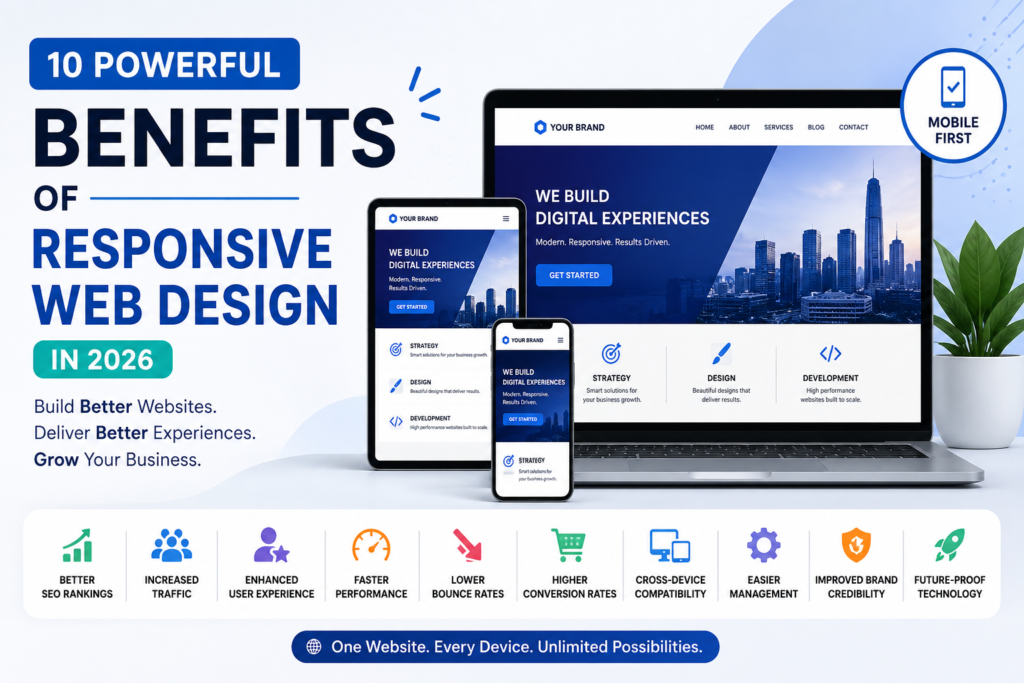
Benefits of Responsive Web Design are more important than ever in 2026 as users access websites through smartphones, tablets, laptops, desktops, foldable devices, smart TVs, and wearable technology. A website that fails to adapt to different screen sizes risks losing visitors, leads, and revenue.
The Benefits of Responsive Web Design include automatically adjusting layouts, content, images, and functionality to fit any device. This creates a seamless user experience while improving SEO performance, engagement, and conversion rates.
What is responsive web design?
Responsive web design is an approach where a website automatically adjusts its layout and content to fit different screen sizes like mobile, tablet, and desktop for a smooth user experience.
Why Responsive Web Design Matters More Than Ever
The Benefits of Responsive Web Design give businesses a significant competitive advantage in today’s mobile-first digital landscape. Responsive websites use flexible layouts, optimized media, and performance-focused development to deliver exceptional user experiences across all devices.
Here are the 10 Powerful Benefits of Responsive Web Design in 2026:
1. Improved Search Engine Rankings
The Benefits of Responsive Web Design include better SEO performance, as Google prioritizes mobile-friendly websites. A responsive website uses a single URL structure and consistent content across devices, making it easier for search engines to crawl and index pages.
Responsive design also supports Core Web Vitals optimization, which remains an important factor for search performance in 2026.
SEO Advantages:
- Mobile-friendly experience
- Better indexing efficiency
- Stronger Core Web Vitals scores
- Improved content accessibility
- Enhanced search visibility
A well-designed responsive website creates a strong foundation for long-term SEO success.
2. Increased Organic Traffic
The Benefits of Responsive Web Design include increased organic traffic, as mobile-friendly websites are more likely to attract, engage, and retain users from search engines.
When visitors can browse comfortably on any device, engagement increases and traffic grows consistently.
Traffic Growth Factors:
| Factor | Impact on Traffic |
| Mobile Optimization | Higher visibility |
| Better User Experience | More returning visitors |
| Faster Loading Speed | Increased engagement |
| Improved SEO | Greater organic reach |
3. Better User Experience Across Devices
One of the key Benefits of Responsive Web Design is delivering a consistent and user-friendly experience across smartphones, tablets, laptops, and desktops.
Visitors expect websites to:
- Load quickly
- Display correctly
- Be easy to navigate
- Work flawlessly on any device
Responsive websites automatically adjust layouts, typography, and navigation menus to create a seamless experience. This leads to longer session durations and higher customer satisfaction.
4. Faster Website Loading Speeds
The Benefits of Responsive Web Design include faster website loading speeds, which improve user satisfaction, engagement, and overall website performance.
Modern responsive websites use:
- Responsive images
- Optimized media delivery
- Advanced compression techniques
- Efficient CSS and JavaScript loading
These improvements reduce loading times and improve overall performance, especially on mobile networks. Faster websites retain more visitors and generate better conversion rates.
5. Lower Bounce Rates
The Benefits of Responsive Web Design include lower bounce rates, as visitors are less likely to leave immediately when they experience a clean, mobile-friendly, and well-structured website.
Responsive websites reduce bounce rates by offering:
- Easier navigation
- Better readability
- Faster loading
- Consistent layouts
When users find information quickly and effortlessly, they are more likely to continue exploring the site.
6. Higher Conversion Rates
The Benefits of Responsive Web Design include higher conversion rates, as businesses can generate more leads, inquiries, subscriptions, and sales through a smooth and user-friendly browsing experience.
Responsive design improves conversions by making it easier for visitors to:
- Complete forms
- Contact businesses
- Make purchases
- Download resources
- Request quotations
A frictionless browsing experience encourages users to take action regardless of the device they use.
7. Cross-Device Compatibility
The Benefits of Responsive Web Design include cross-device compatibility, allowing users to switch seamlessly between smartphones, tablets, and desktops without losing functionality or consistency.
A customer may:
- Discover your website on mobile.
- Research products on a tablet.
- Complete a purchase on desktop.
Responsive web design ensures a consistent experience throughout the entire customer journey. Modern responsive websites also support foldable devices and emerging screen technologies.
8. Easier Website Management
The Benefits of Responsive Web Design include easier website management, as businesses can maintain a single website instead of separate desktop and mobile versions, saving both time and cost.
Responsive design simplifies website management through:
| Traditional Approach | Responsive Design |
| Multiple websites | Single website |
| Separate updates | Unified updates |
| Higher maintenance costs | Lower maintenance costs |
| Increased development time | Faster deployment |
A single responsive website significantly reduces operational complexity and maintenance expenses.
9. Improved Brand Credibility and Trust
The Benefits of Responsive Web Design include improved brand credibility and trust, as users are more likely to trust businesses that offer a professional, consistent, and well-optimized website experience.
A responsive website helps create:
- Professional appearance
- Consistent branding
- Better usability
- Higher customer confidence
When visitors experience a polished and reliable website on every device, trust in the brand increases substantially.
10. Future-Proof Digital Presence
The Benefits of Responsive Web Design include a future-proof digital presence, as responsive websites are built to adapt to new devices and evolving technologies with ease.
In 2026, websites must accommodate:
- Foldable smartphones
- Smart TVs
- Wearable devices
- Voice-assisted browsing
- New screen resolutions
Responsive design provides the flexibility needed to adapt to future technologies without requiring a complete website redesign. Businesses investing in responsive design today are better prepared for tomorrow’s digital landscape.
Conclusion
Responsive web design is no longer optional in 2026—it is a business necessity. A responsive website improves SEO rankings, increases traffic, enhances user experience, boosts conversions, reduces maintenance costs, and prepares businesses for future technological advancements.
Whether you operate an eCommerce store, corporate website, startup, educational platform, or service-based business, investing in responsive web design can significantly improve your online performance and customer satisfaction.
Businesses that prioritize responsive design today will be better positioned to compete, grow, and succeed in the increasingly mobile-driven digital world.
FAQs
1. Is responsive web design better than a separate mobile website?
Yes, responsive design is better because it uses a single website that works on all devices, making it easier to manage and more cost-effective than maintaining separate mobile and desktop versions.
2. What devices support responsive web design?
Responsive websites work on all devices including smartphones, tablets, laptops, desktops, smart TVs, and even some wearable devices.
3. Is responsive web design still relevant in 2026?
Absolutely. With increasing mobile usage and new device types, responsive design is more important than ever for maintaining visibility and user engagement online.
ALSO READ:
Aman Khati
Digital marketing expert at Gundrux. Specialising in SEO, WordPress, Social Media Automation and Faceless AI YouTube.